Source Slip Resistant Rubber Rain Boots for Construction Kitchen Rescue
Compare 30 slip resistant rubber rain boots from verified suppliers. Buyers can evaluate features like puncture resistance, waterproofing, and sizing options for construction, kitchen, and rescue applications.
Key considerations
Products List


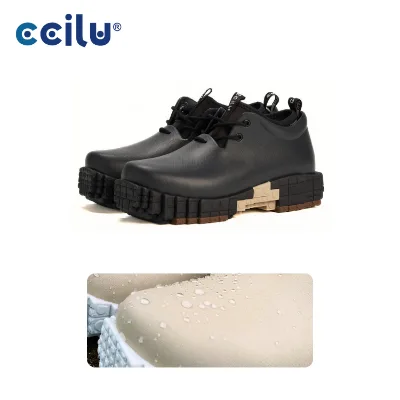
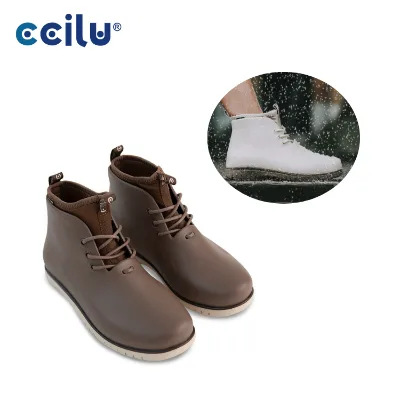
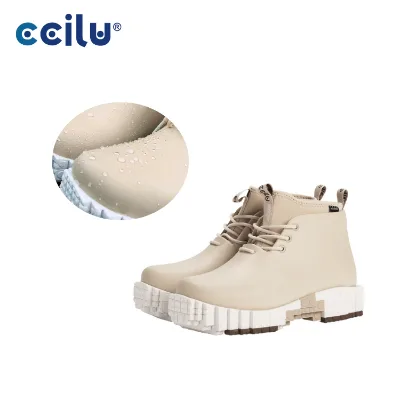


Comprehensive Sourcing Guide
Strategic Sourcing Guide for Slip Resistant Rubber Rain Boots
Understanding Product Attributes and Material Composition
When sourcing slip resistant rubber rain boots, the primary objective is to identify footwear that balances waterproof integrity with specific traction and safety requirements. The market offers a diverse range of configurations, and a disciplined approach requires distinguishing between general rain protection and specialized safety footwear. Based on available product data, the core material for these boots is frequently identified as rubber, specifically natural rubber or PVC (polyvinyl chloride) for the outsole. The upper material varies significantly across listings, with observations noting both rubber and genuine leather constructions. This variation is critical because the material dictates the boot's flexibility, chemical resistance, and durability in wet environments.
For buyers seeking true slip resistance, the outsole composition is the most vital technical specification. Products utilizing PVC outsoles are common in the industrial sector, offering a balance between cost and durability. However, the presence of "Natural Rubber" as a specific element in certain listings suggests a premium tier focused on superior grip and elasticity. The lining material also plays a role in comfort and insulation; observations indicate linings made from mesh, genuine leather, or EVA (ethylene-vinyl acetate) insoles. Mesh linings are often associated with breathability, while EVA insoles provide cushioning. It is essential to verify the specific lining material for the intended application, as a mesh liner may not offer the same thermal insulation as a leather or insulated lining in cold, wet conditions.
The feature set for these boots is equally diverse. While the core keyword emphasizes "slip resistant," many listings include a broader suite of safety attributes. These include puncture resistance, anti-stabbing, and anti-smashing capabilities, often denoted by the presence of steel toes or steel insoles. Some products are explicitly marketed as "Acid and Alkali Resistant," while others carry the opposite attribute, indicating that chemical resistance is not a universal standard for all rubber rain boots. Buyers must carefully cross-reference the "Acid and Alkali Resistant" flag with their specific environmental hazards. Furthermore, the waterproof attribute is a primary differentiator; while many boots are marketed as waterproof, specific listings note "Not Waterproof," highlighting the necessity of verifying this claim before procurement.
Technical Specifications and Sizing Standards
Technical specifications for slip resistant rubber rain boots extend beyond simple material composition to include precise sizing, structural design, and functional features. The sizing data observed indicates a wide range of US shoe sizes, typically spanning from 4.5 to 19, catering to a broad demographic including unisex, male, and potentially larger-footed industrial workers. This extensive size range suggests that suppliers often maintain inventory capable of serving diverse workforce needs without requiring custom molding for every order. However, the upper material specification is often tied to the size and style; for instance, certain models specify "Upper Material: Rubber" while others list "Upper Material: Genuine Leather," which may correlate with specific size runs or style categories.
The structural design of the boot is another critical technical consideration. The "Close Pattern" is frequently listed as "Shoelace," which allows for a customizable fit, essential for ensuring the boot stays secure during active movement in slippery conditions. The toe style is predominantly "Round," a standard design that offers ample room for toe movement and compatibility with safety toe caps. Seasonal availability is noted as "All," implying that these boots are designed for year-round use, though the specific insulation properties (such as insulative features or EVA insoles) should be verified for winter applications.
Feature 2 and Feature 3 listings often highlight "Anti Stabbing" and "Anti Smashing," which are distinct from the primary slip resistance requirement. These features indicate the presence of internal protective layers, such as steel or composite plates, designed to protect against heavy impacts and sharp objects. The "Insoles" specification further clarifies this, with some models listing "Steel" insoles, which contribute to both puncture resistance and structural rigidity. When evaluating technical specs, buyers should look for the convergence of these attributes: a rubber upper, a slip-resistant outsole, and specific internal reinforcements. The "Style" is also a technical differentiator, ranging from "Fashionable and Casual" to "Knee-High Boots" and "Work & Safety Shoes." Knee-high designs offer superior protection against water ingress from the top, while shorter styles may be preferred for mobility in certain kitchen or construction environments.
Compliance, Certification, and Safety Standards
In the realm of industrial and safety footwear, compliance with recognized standards is non-negotiable. While the provided data does not explicitly confirm that every listed product meets specific international standards, it does reference certifications such as CE, ISO, and CCS. These acronyms represent significant benchmarks: CE indicates conformity with health, safety, and environmental protection standards for products sold within the European Economic Area; ISO refers to international standards for quality management and product specifications; and CCS often relates to classification societies for maritime or specific industrial applications.
Buyers must exercise caution when interpreting these certifications. The presence of a certification label in a product listing does not automatically guarantee that the specific batch ordered meets the required performance thresholds for the buyer's jurisdiction. For instance, while ASTM F2913 and ISO 20345 are mentioned in the background context as relevant standards for safety footwear, the actual product data does not confirm that every item in the catalog satisfies these specific numerical test results. Therefore, the procurement strategy must involve a direct verification process. Buyers should request the specific test reports associated with the CE, ISO, or CCS certifications for the exact model number they intend to purchase.
The "Standard" field in the product data often lists dimensions (e.g., 322312) or the term "customized," rather than a safety standard code. This suggests that for many of these boots, the safety compliance is not a fixed, off-the-shelf attribute but may be subject to customization or specific order requirements. In the context of slip resistance, buyers should verify that the outsole pattern and material compound have been tested against relevant friction coefficients. For chemical resistance, if the application involves acids or alkalis, the "Acid and Alkali Resistant" attribute must be explicitly confirmed with the supplier, as the data shows conflicting listings where some boots are resistant and others are not.
Cost Drivers and Economic Considerations
The economic landscape for sourcing slip resistant rubber rain boots is influenced by several key variables, including material costs, customization requirements, and order volume. The observed price range in the market spans from $1 to $70 USD, a wide disparity that reflects differences in material quality, safety features, and brand positioning. A boot priced at the lower end of this spectrum likely utilizes basic rubber or PVC with minimal safety reinforcements, whereas a boot at the higher end may feature genuine leather uppers, steel toes, and comprehensive certifications.
The Minimum Order Quantity (MOQ) is another significant cost driver. The observed MOQ range is extensive, from as low as 1 unit to as high as 6000 units. This variability allows buyers to tailor their procurement strategy based on their budget and inventory needs. For small businesses or trial orders, suppliers with low MOQs (e.g., 500 units or even single units) provide flexibility. However, larger enterprises may leverage higher volume orders to negotiate better unit prices, potentially accessing the lower end of the price range.
Customization is a major factor in cost determination. The data indicates that customization is "Available" and that logos can be accepted for printing. OEM (Original Equipment Manufacturer) services are also noted as "Accept." These services allow buyers to brand the footwear with their company logo or modify design elements to meet specific corporate standards. However, customization typically incurs additional costs and may increase the MOQ. The "Style" of the boot also impacts cost; "Fashionable and Casual" designs may carry a premium over purely utilitarian "Work & Safety Shoes." Additionally, the "Element" of the boot, such as "Natural Rubber National Tide Classic," suggests that specific material sourcing or design heritage can influence pricing.
Typical Applications and Usage Scenarios
The versatility of slip resistant rubber rain boots makes them suitable for a wide array of industrial and commercial applications. The "Usage" field in the product data explicitly lists Construction, Kitchen, Rain Day, and Rescue scenarios. In the construction sector, the boots must withstand rough terrain, heavy debris, and potential chemical exposure. Here, the combination of puncture resistance, anti-smashing features, and slip resistance is paramount. The "Rescue" application implies a need for high durability and reliability in emergency situations, where the boots must provide immediate protection against water and hazardous materials.
Kitchen environments present a unique set of challenges, including wet floors, grease, and frequent exposure to cleaning chemicals. Boots used in this setting require excellent slip resistance and often benefit from "Acid and Alkali Resistant" properties to withstand harsh cleaning agents. The "Waterproof" attribute is critical here to keep feet dry during prolonged exposure to water. For "Rain Day" usage, the primary function is protection from the elements, but the addition of safety features like "Anti Stabbing" suggests that these boots are often dual-purpose, serving as both rain gear and safety footwear.
The "Gender" specification of "Unisex" or "Male" indicates that the design is generally inclusive, though specific sizing and fit may vary. The "Season: All" attribute reinforces the idea that these boots are designed for continuous use regardless of weather conditions. However, buyers should consider the specific environmental demands of their site. For example, a kitchen worker may prioritize ease of cleaning and chemical resistance, while a construction worker may prioritize impact protection and ankle support provided by knee-high designs. The "Style" of the boot, whether "Knee-High Boots" or shorter styles, should align with the specific hazards of the work environment.
Supplier Evaluation and Quality Control Protocols
Evaluating suppliers for slip resistant rubber rain boots requires a rigorous approach to ensure that the products meet the stated specifications and safety standards. The "prod_origin" is listed as China, which is a major manufacturing hub for this category. While this provides access to a vast supply chain, it necessitates careful due diligence regarding the supplier's quality control processes. Buyers should verify the supplier's ability to produce consistent batches that match the "prod_model" and "prod_standard" specifications.
Quality control should begin with a review of the product documentation. Buyers must confirm that the "Certification" (CE, ISO, CCS) is valid and applicable to the specific model being ordered. It is advisable to request third-party test reports that validate the slip resistance, puncture resistance, and waterproof claims. The "Feature" list, which includes attributes like "Puncture-Resistant," "Slip-Resistant," and "Waterproof," should be cross-referenced with physical samples. Visual inspection of the outsole pattern, the integrity of the stitching, and the quality of the lining material (Mesh, Genuine Leather, or EVA) is essential.
The "prod_packing" method, which ranges from "Carton" to "OPP Bag" or "Each Packed in a Polybag," also serves as an indicator of the supplier's attention to detail. Robust packaging ensures that the boots arrive in pristine condition, free from damage that could compromise their safety features. For large orders, the "Carton or Pallet" option suggests a capacity for bulk shipping, which is important for logistics planning. Buyers should also assess the supplier's responsiveness to customization requests, as the "Logo" and "OEM" options indicate a willingness to adapt to buyer needs.
Long-Term Procurement and Supply Chain Stability
Long-term procurement of slip resistant rubber rain boots involves considerations beyond the initial purchase price. The "Customization" and "OEM" capabilities of suppliers suggest a potential for long-term partnerships where the footwear can be tailored to the evolving needs of the organization. However, the variability in "MOQ" (ranging from 1 to 6000) requires buyers to plan their inventory carefully. High MOQs may be necessary to secure the best unit price, but they also tie up capital and storage space.
The "prod_model" stability is another factor. With models like "JY990," "Work & Safety Shoes-073B," and "Men's Rubber Rain Boots-094A," buyers should ensure that the supplier has a track record of maintaining consistent production of these models. Frequent model changes can disrupt supply chains and complicate the replacement of worn-out footwear. Additionally, the "Lead Time" and "Location" (China) should be factored into the procurement timeline. While specific lead times are not provided in the data, the distance from the manufacturing origin to the buyer's location implies a need for buffer time in the supply chain planning.
Finally, the "Element" of the product, such as "Natural Rubber National Tide Classic," suggests that material sourcing trends can influence availability and cost. Buyers should monitor the market for shifts in raw material prices, particularly for rubber and PVC, as these can impact the long-term cost of ownership. By establishing a relationship with a supplier that offers customization, maintains high quality standards, and provides reliable logistics, buyers can ensure a steady supply of slip resistant rubber rain boots that meet their safety and operational requirements.
FAQs
Are slip resistant rubber rain boots waterproof?
Many models are waterproof, but some listings explicitly state they are not. Buyers must verify the waterproof attribute for each specific product before procurement to ensure protection against water ingress.
What materials are used for the outsoles?
Outsoles are commonly made from PVC or natural rubber. PVC offers a balance of cost and durability for industrial use, while natural rubber provides superior grip and elasticity for slip resistance.
Do these boots offer puncture and anti-stabbing protection?
Yes, many models feature puncture resistance, anti-stabbing, and anti-smashing capabilities. These protections often involve steel insoles or internal plates to shield against sharp objects and heavy impacts.
Which certifications are available for safety footwear?
Some products carry CE, ISO, and CCS certifications. These indicate conformity with specific safety and quality standards, though buyers should request test reports for the exact model to verify compliance.
Can I customize the logo and design of the boots?
Customization is available for logos and OEM branding. Buyers can request printing services and design modifications, though this may affect the minimum order quantity and unit pricing.
What is the typical minimum order quantity for these boots?
The minimum order quantity ranges from 1 to 6000 units depending on the supplier. Small businesses can often order single units, while larger enterprises may negotiate better rates with higher volumes.
Are these boots suitable for acid and alkali environments?
Chemical resistance varies by model; some are acid and alkali resistant while others are not. Buyers must confirm the specific chemical resistance attribute for their intended industrial or kitchen application.
What sizes are available for unisex and male footwear?
Sizes typically range from US 4.5 to 19, catering to unisex and male demographics. This wide range allows suppliers to serve diverse workforce needs without requiring custom molding for every order.